
Let's name what actually happened
Your sex drive didn't disappear. It shifted. There's a difference, and it matters because one feels like failure and the other feels like information.
Honestly? Most people I work with arrive at 40 expecting a cliff drop in desire. Instead, what happens is subtler and weirder: the automatic spark dimmed. The kind of desire that used to show up without asking now requires context. A look across the kitchen doesn't land the same way. Your body feels further away from want than it used to.
What science says is actually happening
Here's the part nobody explains clearly. Testosterone starts to decline in your 30s, but the effect becomes more noticeable by 40 because it's cumulative. For people with ovaries, testosterone is a huge driver of spontaneous desire (yes, even more than estrogen in some cases). Less testosterone means your brain's reward system responds less intensely to sexual stimuli. A partner's touch that once triggered automatic arousal now registers more as "nice" than "now."
But here's what's crucial: this is not a permanent rewiring. It's a recalibration.
There's also the elephant in the room that nobody talks about at 40. Your life is probably more complicated. You might be juggling work stress, parenting teenage humans, aging parents, relationship fatigue, or career pivot anxiety. Desire is metabolically expensive. Your brain has limited resources, and if they're allocated to managing four simultaneous life crises, pleasure gets deprioritized. This is not laziness. It's biology.
Why lemon vibrators reset the equation
A lemon clitoral vibrator changes the game for lower libido because it removes the pressure that makes everything worse.
Here's the pattern I see repeatedly: when desire drops, couples make it a problem to solve together. They turn it into performance anxiety. You start tracking when you want sex, comparing yourself to younger you, wondering if your partner finds you less attractive. Suddenly, the space where pleasure lived now has a spotlight pointed at it. Nothing kills desire faster than surveillance.
A lemon sucker lets you solve this alone first. You get to explore what your body still wants without an audience, without stakes, without anyone's expectations attached.
The Lem's suction technology is particularly useful at 40-plus because it doesn't require the same sustained arousal that penetration or even friction stimulation demands. You can start with low intensity, move slowly, and let your body find its own pace. No performance. No finish line. Just sensation.
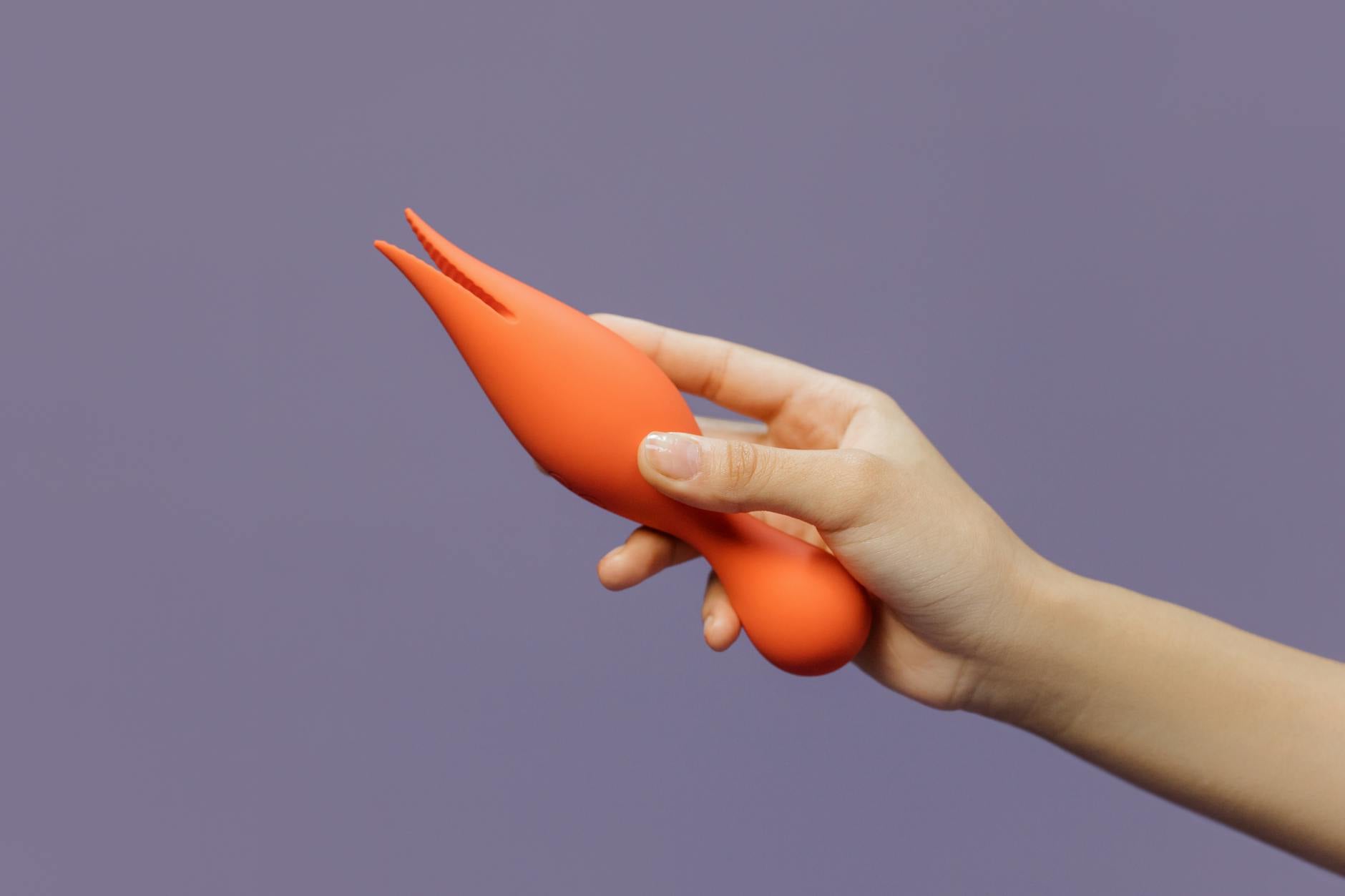
Photo by cottonbro studio on Pexels
The practical way to restart
If you're going to use a lemon vibrator when desire feels low, skip the performance mindset. This isn't about achieving an orgasm. It's about reminding your nervous system that pleasure exists.
Start with curiosity, not goals. Turn it on at the lowest setting. Notice what it feels like. Notice what patterns of movement feel interesting versus irritating. Give yourself at least three sessions before deciding anything about whether it works for you. Your body takes time to remember that it can want things.
Separate pleasure from context. Use your lemon clitoral vibrator at a time when you're not supposed to be productive. Not right before sleep (exhaustion makes desire harder). Not in a rush. A weekend morning when there's no deadline can be revelatory because your nervous system isn't in go mode.
Solo first, partner later. Once you've reconnected with your own pleasure, bringing a lem vibrator into partnered sex is easier. You already know what settings feel good, where you like the intensity, how much time your body needs. You're no longer depending on your partner to guess.
What changes in your body at 40 (and what to adjust for)
Your clitoral tissue is less engorged without the constant estrogen support. This means sensation might feel more diffuse at first. The suction approach works better than direct vibration for many people at this stage because it creates a broader sensation rather than a pinpoint tingle.
Your pelvic floor probably holds more tension now, whether you notice it or not. Stress, core changes, and time accumulate there. This tension actually suppresses arousal signals. Spending 10 minutes relaxing your pelvic floor before using a lem vibrator can genuinely change what you feel. Breathe into your belly. Let your pelvic floor soften. Then start.
Your lubrication might need support too. Even if you're not in menopause, lower testosterone means less natural lubrication. A water-based lubricant paired with your lemon sexual toy creates better sensation and removes friction friction that can actually discourage arousal.
The mind part (because it matters as much as the body)
Lower libido at 40 is often as much about permission as it is about physiology.
You've probably internalized some version of the story that you should want sex less by now. Or that your desire should match your partner's. Or that if you're not constantly horny, something's wrong with you. These stories suppress desire more effectively than any hormone deficiency.
Using a lemon clitoral vibrator is permission. It's you saying to yourself: my pleasure matters. I get to explore what I want on my own terms. I don't have to perform for anyone. This is for me.
That permission alone shifts something neurologically. Your nervous system starts to categorize pleasure as safe and available again, not as something you're supposed to do or provide.
When to talk to someone else
If your desire has completely vanished and hasn't returned after a month of solo exploration with a lem vibrator, it's worth a check-in. A doctor can check your testosterone levels if you want. A therapist can help if relationship strain is driving the drop. A menopause specialist can assess if you're in perimenopause and hormone support might help.
But mostly? Lower libido at 40 is normal. It doesn't mean you're broken. It means your body is asking you to slow down and get intentional.
A lemon sexual toy is just a tool. The real shift happens when you decide your pleasure is worth the attention. Everything else follows from there.
FAQ
Why does libido drop specifically in your 40s?
Testosterone begins declining in your 30s, but by 40, the cumulative effect becomes noticeable. Additionally, life complexity peaks around this time. Work stress, caregiving responsibilities, relationship patterns, and accumulated fatigue all compete for your nervous system's resources. Desire is metabolically expensive, so when your body is managing multiple stressors, pleasure naturally gets deprioritized. This is not permanent and does not indicate a problem with you.
Can a lemon vibrator actually increase desire, or does it just help with arousal once it starts?
A lemon clitoral vibrator does both. Regular use can actually increase baseline desire over time because it reminds your nervous system that pleasure is available and worth pursuing. But more immediately, it jumpstarts arousal without requiring the spontaneous spark to arrive on its own. Many people find that after using a lem vibrator consistently, their spontaneous desire naturally returns as they rebuild the neural pathways between pleasure and reward.
Is lower libido at 40 permanent?
No. Lower libido is a shift, not a dead end. Testosterone can be supported through various approaches (lifestyle changes, in some cases supplementation). More importantly, desire responds to attention and permission. Many people find their libido rebounds once they stop treating it like a problem and start treating it like something to explore. A lemon sexual toy is often part of that reclamation.
Should I tell my partner I'm using a lemon vibrator if my sex drive is low?
That depends entirely on your relationship and comfort level. Some people find that using a lem vibrator solo first, then eventually together, creates a natural bridge back to partnered pleasure without turning low libido into a crisis. Others prefer to keep their solo exploration private. What matters is that you're not hiding pleasure out of shame. You're taking private time to reconnect with yourself first.
Does lube actually make a difference with a lemon clitoral vibrator?
Yes, significantly. Even a small amount of water-based lubricant changes the sensation with a lem vibrator because it reduces friction and allows the suction to work more smoothly. At 40-plus, when natural lubrication might be lower, this makes an even bigger difference. It's not a sign something's wrong with you. It's simply adjusting for how your body is now.
How long does it take to feel desire again after it's dropped?
This varies widely. Some people notice a shift after three or four sessions with a lemon vibrator. Others take a few weeks of consistent solo exploration before desire creeps back in. The key is removing the timeline. The moment you make it a problem to solve by Thursday, you activate performance anxiety, which suppresses desire further. Give yourself a month of casual exploration with no expectations.
The takeaway
Lower sex drive after 40 is not a failure of your body. It's a signal that something's changed and deserves attention. A lemon sucker is one way to give it that attention. But the bigger work is permission. You deserve pleasure. Your body deserves exploration. And you get to decide what that looks like, on your own schedule, with your own rules.
Ready to start exploring? Check out our buying guide to find the right lemon vibrator for your needs, or reach out if you have questions.